

Today, the world's favorite teddy bear turns 96, and his book turns 91. We share with you the article by Dr. Milena Radeva, published in Kultura newspaper – Issue 34 (2871), October 21, 2016:
"On August 21, 1920, Christopher Robin was born, the son of writer and playwright Alan A. Milne. For his first birthday, the boy received a gift – a teddy bear, which he named Edward.

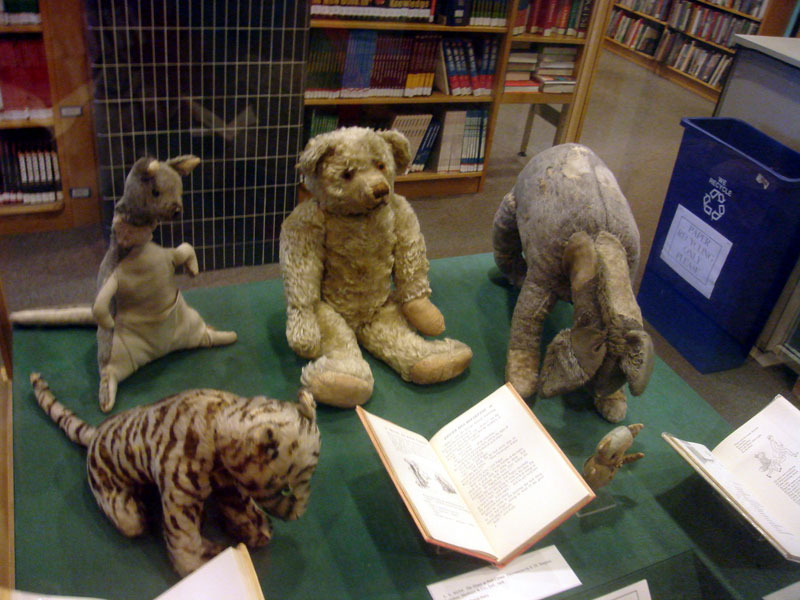
At that time, the London Zoo was home to the tamed Canadian bear Winnipeg, whom Christopher Robin often visited and spent a long time in his company. Strongly impressed by the friendly animal, the boy renamed his stuffed toy Winnie (in the Bulgarian translation "Bee"). So Winnie and Christopher Robin lived together. At Christmas 1921, they were joined by Eeyore, followed by Piglet, Kanga and baby Roo came to the "forest" in 1925, and Tigger - only in 1927. Rabbit and Owl were inspired by the wild animals that inhabited the forest near Milne's home in Sussex, and do not exist as toys. Today, all of Christopher Robin's friends are in the New York Public Library.
Inspired by his own son and his games, the writer began working on a series of poems. His first collection of poems was entitled “When We Were Very Small” (1924) and for its illustrations he was offered the artist Ernest Shepherd, who at that time worked for the humorous magazine “Punch”. This was also the first appearance of Winnie the Pooh to the general public. He, immortalized in the poem “The Good Bear”, is very worried about being fat. Although at first the writer was not convinced that these illustrations were the right choice, after the success of the book, Shepherd and Milne began to work together on all subsequent books about Christopher Robin and Winnie the Pooh.
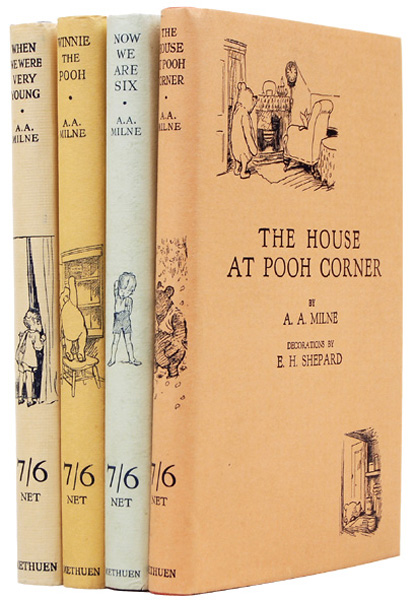
On October 14, 1926, the adventures of "Winnie the Pooh" were first published by the English publishing house "Methuen", and the date was adopted as the birthday of the Bear. The following year, "We Are Six" was published, and in 1928 - "The House in Pooh's Corner". The images that the talented artist creates become recognizable and beloved images for generations of children and adults. The light ink drawing, resembling a linear sketch, very accurately fits the subtle instructive humor of Milne's text. With a minimal load on the compositions, Shepherd transports the reader to the Hundred Acre Wood, and to the muslin trap, and to the branches of the oak in search of "meth". Each of the charismatic characters stands out with its own character in the drawing, similar to the characters that Milne himself builds in both books. The treatment of Christopher Robin's portrait characterization in no way distinguishes him from the "portraits" of his toys, and the reader is left with no doubt that Pooh, Piglet, Rabbit, Eeyore and Owl are as real as the little boy. The first illustrations that Shepherd created were black and white, but in 1932 the American producer Stephen Schlesinger bought the copyright to Winnie the Pooh.
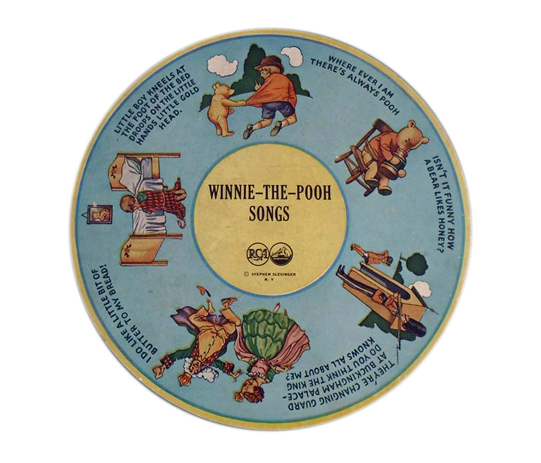
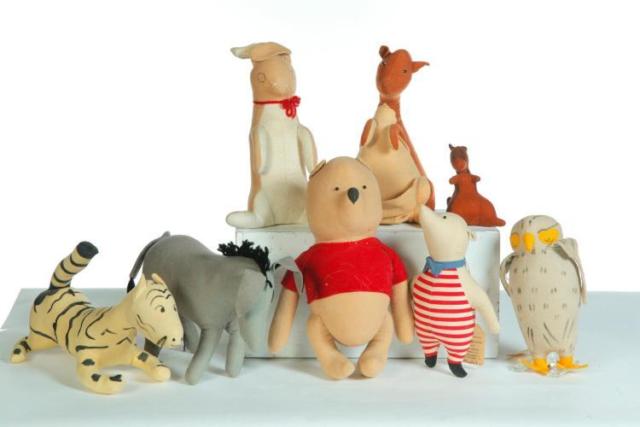
On a seven-inch vinyl record with nursery rhymes based on the poems from the book, Winnie the Pooh first appears in color, wearing a red T-shirt. In the original illustrations drawn by Shepherd, Pooh is only dressed in two chapters – “Chapter Three, In Which Pooh and Piglet Go Hunting and Almost Catch a Weasel” in the first book and “Chapter One, In Which Eeyore Builds a House in Pooh’s Corner” in the second book, as the action takes place in winter. The bear’s red T-shirt was quickly noticed by the American market, and in 1940, Agnes Brush created the first plush toy with the red T-shirt. Soon, other toy characters appeared, adhering very strictly to the original drawing of the illustrations.
In 1961, Milne's wife, Daphne, and Schlesinger's wife, Shirley, sold their rights to the Walt Disney Company for a percentage of the brand's profits. Since then, the copyright to the entire "Winnie-the-Pooh" concept has been held by the American film giant, which has been rapidly developing the characters' new look. According to Forbes magazine, this is the most profitable image that Disney has ever created - in 2002, profits reached over $ 1 billion, and in 2005 they exceeded $ 5 billion.
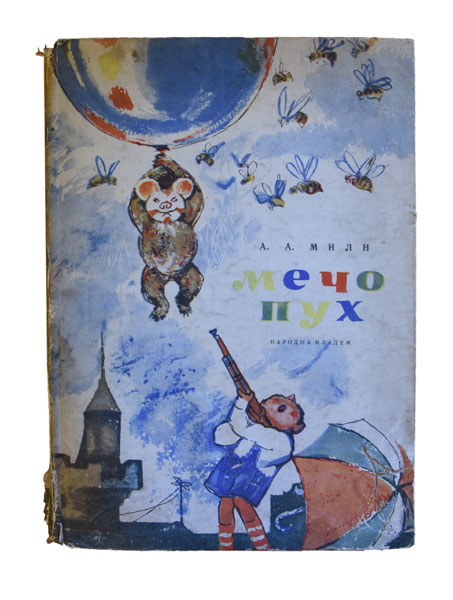
In Bulgaria, Winnie the Pooh was first presented in 1963 by the publishing house "Narodna Mlazed". It is strange that the copyright was purchased by the German publishing house "Bernard Tauhnitz" - 1933, but Vera Slavova's translation is from English. In Germany, "Winnie the Pooh" is one of the most successful books, which is most likely the reason for its publication in Bulgaria through the German market. This first edition does not have the original illustrations by Shepherd, which can only be explained by the issue of international copyright in this period and the fact that the political system in Bulgaria ratified the international conventions on intellectual property only in 1965 and 1970. The illustrations that greet the reader in the book are colored, drawn in pencil, and the shapes are framed by a black outline. Most of them very accurately recreate Shepherd's original compositions, but the characters have a different character, imagery and style. Pooh is presented as a large, clumsy bear without a shirt, but on the other hand with a red and blue scarf. Piglet resembles a real pig, which makes him a not particularly charming character, and Christopher Robin has completely lost the charm of the little cunning boy from Sussex, turning into a red-faced kid with shaggy blond hair and blue overalls. The artist T. Tonchev is listed as the author of the cover, but most likely his intervention is limited to that, since it visually differs from the general appearance of the interior illustrations. This edition contains only Milne's first book and did not achieve serious success on the Bulgarian market. Realistically speaking, very few readers remember him, and the book itself is almost apocryphal today.
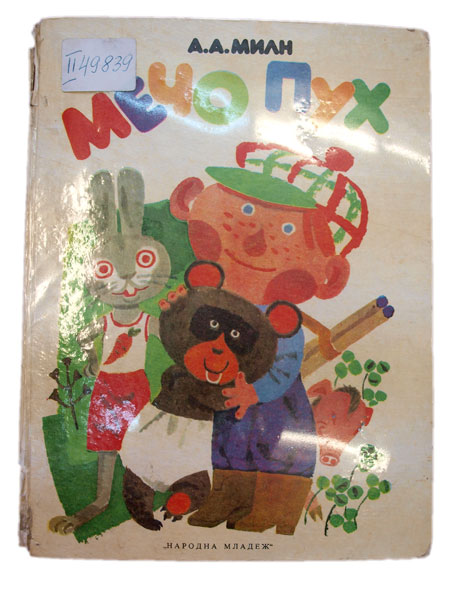
The next attempt to acquaint the Bulgarian reader with the Teddy Bear, which conquered the whole world, was in 1978, when Boris Kitanov created the illustrations for the second edition of "Narodna Mlazed". This time the book was published in a large - album - format with many more illustrations, some of which were almost a whole page or a solution. The images are entirely in the style that dominated illustration in Bulgaria during this period - strong stylization and simplification of colors, building geometrized images with a flat, decorative character. The majority of the images are placed on a white background, which does not give spatiality to the book solutions, but rather strengthens the conventionality of the drawing. Kitanov did not follow Shepard's illustrations, since the compositional solutions in the two books rarely have points of contact. The characters hardly resemble the original images from the 1920s and even more so - the original toys. The truth is that the book created by the artist is fully justified by the visuality of the 1970s and the mass template that has defined children's illustration in the country since the late 1960s. In his observations, the attentive reader can go even further, discovering too many points of contact with the Czech artist Zbigniew Rychlicky and his work in the two books about "Mecho Klepoushko", published in 1962 and 1966, and even with those of Todor Krastev for "Kak Mecho Karpatski stanava kapitan" by Vesa Paspaleeva.
But let's get back to Winnie the Pooh... Boris Kitanov's works, although mannered even from the point of view of that time, manage to interpret the stories in their own way. The colorful compositions create a pleasant "colorful" mood in the overall vision of the book, and the red-haired Christopher Robin is a familiar image for Bulgarian children. Piglet again causes problems and is difficult to recognize as a small, scary animal, since he resembles a bristly pig, but the other characters easily carry the stylistics defined by the artist and (abstracting from Shepherd's drawings) manage to make the reader smile. It is with these illustrations that many of the book's native fans associate the images of the characters from the Hundred Acre Wood.
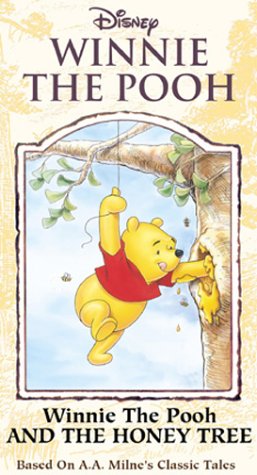
In the 70s, the stories about the bear and his friends experienced a boom not only in Bulgaria, but also internationally. Walt Disney created short films based entirely on both books. The first film was presented in January 1966 and was titled "Winnie the Pooh and the Honey Tree" and included the first two chapters of the first book. The twenty-five-minute animation was an incredible success in the USA, although it was not received so warmly in England. The sequel, Winnie the Pooh and the Storm (1968), which included six more chapters from both books, made Pooh such a popular character that in 1969 it won the Oscar for Best Animated Feature. Winnie the Pooh and Tigger (1974) solidified the characters' characters, and in 1977 Disney made the first feature-length film based on both books, which included almost all the chapters. The strict adherence to the original stories by Alan Milne and the drawings by Ernest Shepard made the film as iconic as the books. The animators retained the basic shape and silhouette of the characters, as well as the pulsating ink drawings, which really brought the images from the books to life. Pooh is now always wearing his red T-shirt, Piglet is a small, timid, pink pig, Eeyore is the “old gray donkey” who is always sad, Owl “knows everything about everything”, Tigger “shows off too much”, and the image of Christopher Robin is completely covered by Milne’s style. Only Rabbit is designed in the Disney style, but this does not separate him from the general vision of the characters.
Again in the 70s, “Methuen” republished Milne’s four books with the original illustrations by Shepard. This time, however, the artist colored them and the huge audience of Pooh and his friends recognized the connection between the color films and the color illustrations.
The first original illustrations by Ernest Shepard for “Winnie the Pooh” appeared on the Bulgarian market only in 1988 in the one-volume edition of “Otechestvo”. An interesting fact is that, although with slight edits, the translation by Vera Slavova remains the same.
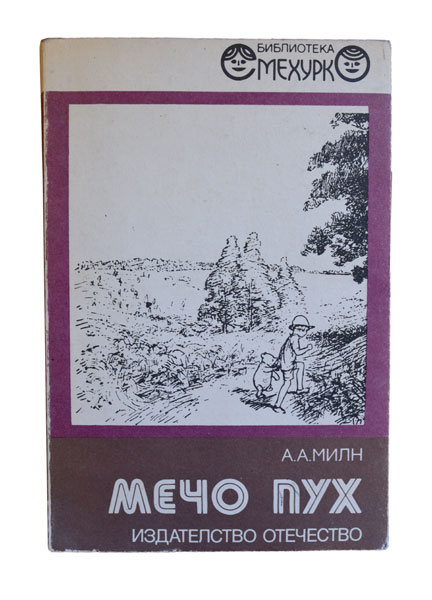
During the period of publishing chaos in the 1990s, the stories about Winnie the Pooh were published in several more editions, differing only in their cover and format. It was not until 2001 that the Bulgarian reader saw Shepherd's color illustrations in an album format containing all four of Milne's books. This is also one of the best editions in Bulgaria, but, to the disappointment of fans who know the books by heart - the translation is new. With the entry of the Egmont Bulgaria publishing house into the market in 1991, the publication of the magazine of the same name "Winnie the Pooh" also began. Since the publishing house holds the copyright license to reproduce the products of "Walt Disney", the "new" Winnie the Pooh appeared on the domestic market.
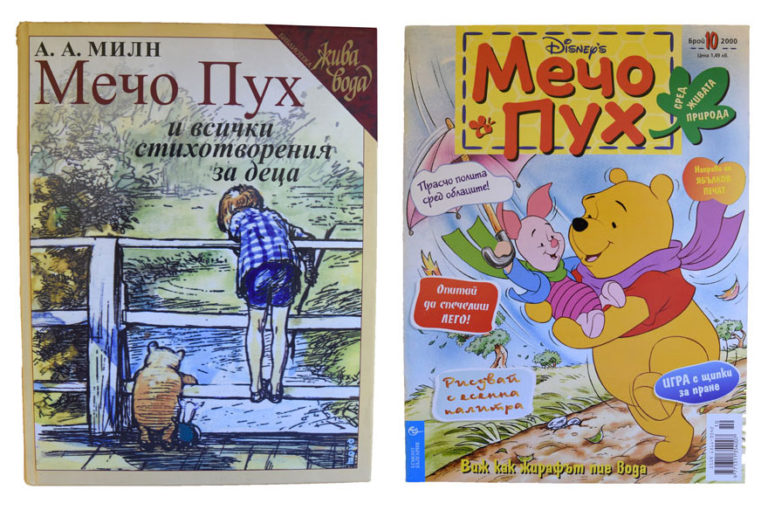
However, the truth is that this new vision, which enchants the youngest readers, is not at all new on a global scale. After the first film in 1977, the company produced 7 more full-length films and numerous series that were not based on the books. With the development of technology, the cartoon characters lost much of their original charm - to the point of absolute purification of color, shape and contour in the film "Tigger" from 2000 and the subsequent films, magazines, books and toys. Milne fans from all over the world do not agree with the changes that are occurring in the development of the characters. But the youngest readers, to whom Disney directs its products, adore Pooh and his friends, who are becoming more and more fun, easy to recognize and even easier to draw and color. The last film to be made to date, Winnie the Pooh (2011), not only returns to Milne's story - Eeyore's lost tail - but also to Shepard's drawing. The chief artistic director of Disney and Pixar, John Lasseter, completely abandons 3D processing and, looking back to the 60s, creates hand-drawn frames. Directors Anderson and Hall base the story on Milne's texts, quoting them in the film.
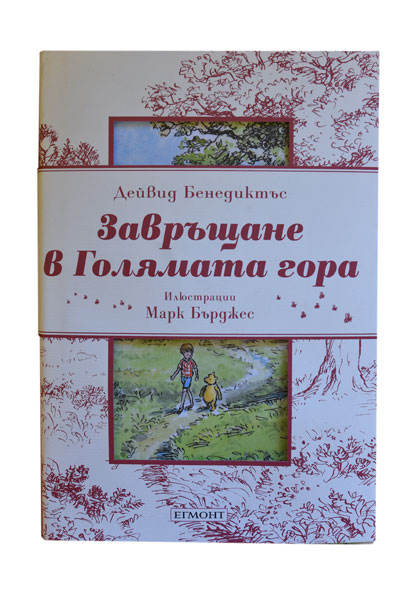
And when we all thought that nothing new related to Alan Milne, Ernest Shepard, Christopher Robin, Winnie the Pooh, Piglet, Rabbit, Eeyore, Tigger, Owl and Kanga and baby Roo could surprise us, in 2009 David Benedictus wrote the sequel, Return to the Big Woods, illustrated by Mark Burgess! Although the book is officially recognized by the Winnie the Pooh Copyright Trust, it is unlikely to ever be accepted by Milne and Shepard's loyal fans.
On October 14, Winnie the Pooh celebrates his 90th birthday.
Happy birthday, “my silly bear”!
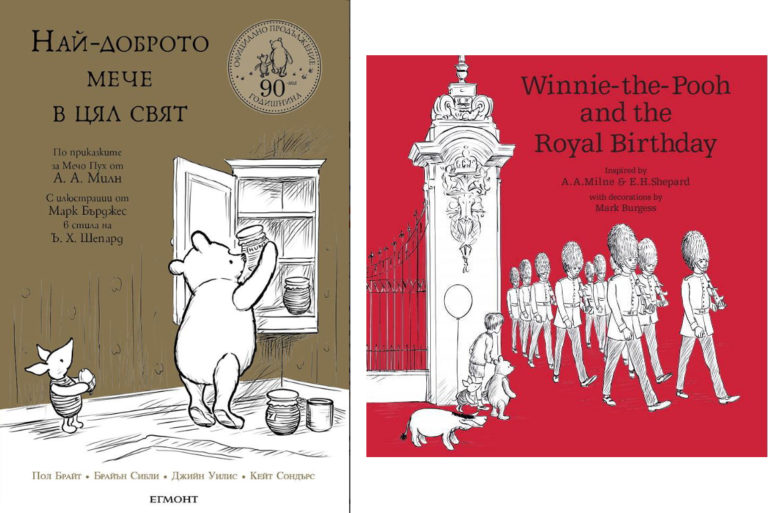
Two more books dedicated to Winnie the Pooh have recently been published – “Winnie the Pooh and the Royal Birthday”, dedicated to the double anniversary of Queen Elizabeth II and Winnie the Pooh; and the second official continuation of the stories – “The Best Bear in the Whole World”, both illustrated by Mark Burgess.
Text and photos of the books: Dr. Milena Radeva
Add comment