


July… it’s time for the sea, relaxation and reading on the beach, so this month we will dedicate it to covers and their creators.
Stoyan Atanasov
Education: Bachelor, Graphic Design, NBU
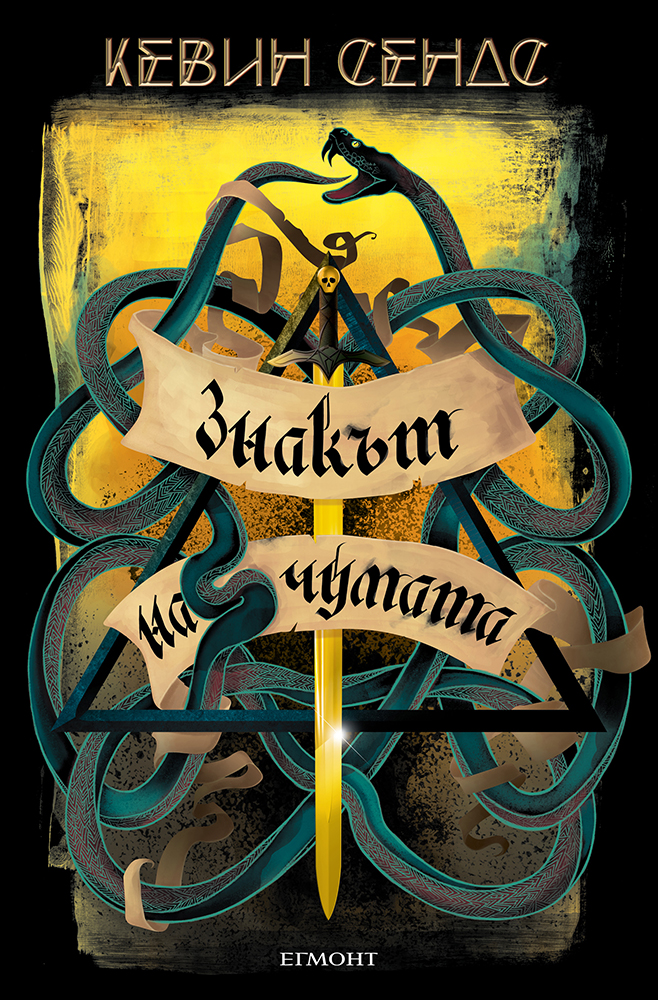
Professional experience: I have been working in the field of book publishing for 11 years. I have long lost track of how many books I have worked on, but the covers are several dozen each year, and the pre-press preparation is for a three-digit number of editions per year. I have worked with most of the major publishing houses in Bulgaria and many of the smaller ones. I have made covers for the Bulgarian editions of books by J. K. Rowling, Sylvia Plath, Patrick Ness, Ken Follett, W. E. Schwab, Rick Riordan, Elif Shafak and many, many others. I think that people who know my work associate me mainly with covers for teen novels.
In 2016, I founded Kontur Creative, a design and prepress studio, and for the past three years I have been working there together with the most talented, motivated and dedicated colleagues I could ever dream of.
Exhibitions/projects/awards:
Our studio’s exhibition, “Beyond the Contours,” was recently held.
The rest of the time, bookstores are our showrooms.
What does it actually mean to make covers? Tell us about your process. It all starts with an email or a phone call: “We have a book here, can you do it?” We agree on a deadline and I receive the text, often not in its final edited form, sometimes in the original. I read the book, usually in my “free” time. During work, I have other tasks. 🙂
When I’m ready, I sketch out a version and first discuss it with my colleagues in the office. If I don’t have any ideas for the specific book, I give the text to one of my colleagues, if time permits, or I briefly explain what it’s about, what the spirit of the work is, and the general feeling. We brainstorm, discuss options. When we have a proposal that we feel comfortable with, we send it to the publisher for approval. Surprisingly often we succeed the first time, but sometimes there are corrections. In such a situation, we reflect the corrections and send it again for approval. This is repeated as many times as necessary.
After approving the vision, we receive the remaining texts and technical details, we create a file for printing, and the cover goes to production.
Is the cover an illustration? Of course. And like all illustrations, it exists to serve the text. Perhaps the goals set for it are a little more, because in addition to being true to the work, the cover is expected to sell the book as a product, to attract and retain enough attention, to arouse curiosity, to stimulate a certain consumer behavior, which now, in the age of the Internet and social networks, continues beyond the purchase.
Cover, for which work do you dream of creating? I had two dreams: to make a cover for Andersen and for "The Wizard of Oz". Both came true. Maybe I should invent a new dream. 🙂
What do people most often NOT know about the cover of a book or the process of creating it? In my specific case, they don't know how much time it takes me to read the book before I start working on its cover - I'm a terribly slow reader, but when I read for work, I try to be careful so as not to miss something important.
They don't know that often the version of the cover they see on the printed edition is not the first one suggested by the designer. Sometimes the requirements and corrections are so numerous and specific that the final version has nothing to do with the designer's taste and vision.
Favorite examples that made you reach for a book because of the cover? In 2002 I discovered Terry Pratchett thanks to Josh Kirby's covers. To this day I am a huge fan of the work of both gentlemen.
Website: www.kontur.bg
Facebook/Instagram/Twitter page:
https://www.facebook.com/konturcreative/
https://www.instagram.com/konturcreative/









Add comment